Toronto’s reputation for excellence in pediatric healthcare and early childhood development is deeply rooted in the world-class research and clinical work at The Hospital for Sick Children (SickKids). Thanks to the unwavering dedication of two Leaders Circle Ambassadors, this reputation will be further strengthened when the city welcomes the 19th World Congress of the World Association for Infant Mental Health (WAIMH) Congress in October 2026
The successful bid for this prestigious biennial event was led by two respected thought leaders from SickKids: Chaya Kulkarni, Director of Infant and Early Mental Health Promotion (IEMHP), and Stefanie Watmough, Business Manager at IEMHP. Their efforts helped secure a congress that will advance scientific and clinical discussions on infant mental health, while also generating an estimated $8.1 million in economic impact for the local economy.
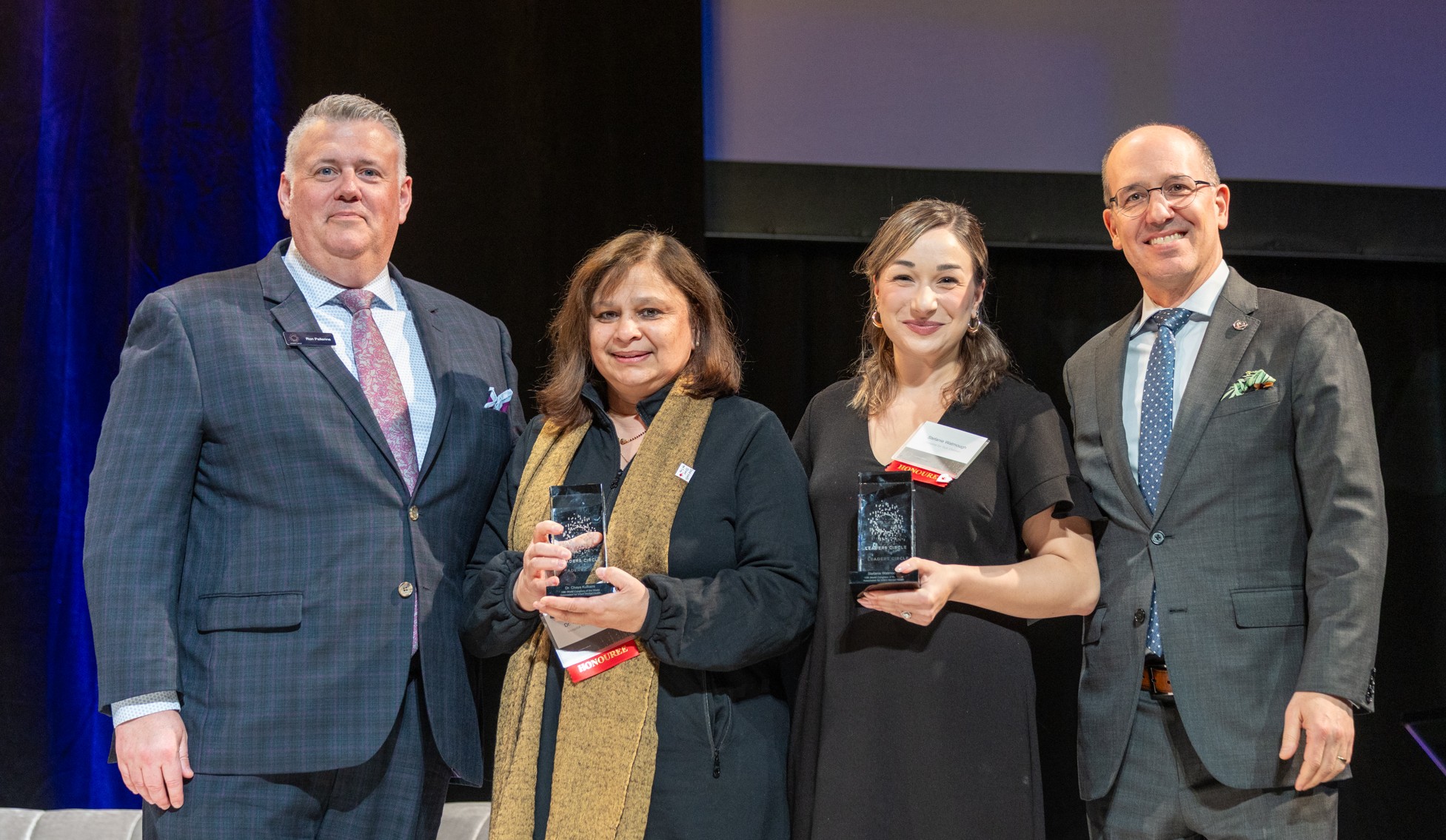
In the following Q&A, Leaders Circle’s Senior Manager, Kathy Nicolay, explores how the bid was secured and what hosting this Congress means for Toronto.
KN: Toronto’s local expertise in infant mental health and pediatrics, particularly through institutions like SickKids, is world-renowned. How does this ecosystem reinforce the themes of this specific Congress?
Chaya: Toronto has a reputation as a hub for infant mental health. Several clinicians here have devoted their careers to developing innovative tools, resources, and interventions aimed specifically at supporting infant mental health. This focus is expanding across multiple sectors—public health, children’s mental health, and early learning and care—which are increasingly attentive to this area of development. The Congress offers a platform to showcase these efforts, learn from others, and foster new connections.
KN: Securing a World Congress involves a complex and competitive bidding process. How did The Leaders Circle and Destination Toronto help ease and navigate those challenges?
Chaya: We felt very supported in preparing for the bid. The Leaders Circle and Destination Toronto assisted in sourcing the hotel, AV, preparation of the slide deck and even development of the budget. This support was incredibly helpful.
Stefanie: Destination Toronto was truly instrumental in helping us cross the finish line. Our main point of contact, Alice, went above and beyond — she even traveled to Dublin to support us in person and confidently field city-specific questions during the bid process. Their team also provided high-quality B roll and photography that we’ve leaned on heavily, both during the bid and in subsequent communications. Beyond logistics, Destination Toronto committed designated funding to support the promotion and marketing of the Congress, including assistance with paid LinkedIn campaigns, which significantly strengthened our visibility and outreach.
At the same time, The Leaders Circle made us feel fully embraced as partners. They checked in with us repeatedly to ensure we had everything we needed and proactively connected us to additional opportunities for support. One standout example was introducing us to the Leaders Circle Research Grant program, through which we were fortunate to receive $35,000 to advance our emerging work. Together, their guidance, advocacy, and tangible resources helped simplify an otherwise complex and demanding bidding process.
KN: What was your personal ‘mission’ when you decided to champion this bid?
Chaya: Hosting this event was a major opportunity to highlight infant and early mental health, a frequently overlooked area even within children’s mental health. It proved effective! The Ministry of Health is now focusing more on infant mental health and will present at the Congress, prompting new discussions in the field. As Canadian leaders, we felt it was crucial to spotlight science, policy, and practice related to early mental health.
Stefanie: My mission was to help turn a shared vision into a strong, executable bid. I was motivated by the chance to support Canada’s leadership in infant and early mental health by ensuring the proposal was clear, credible, and well supported. Championing the bid meant focusing on the coordination, storytelling, and partnerships that would give the Congress the strongest possible foundation and set us up for long-lasting impact.
KN: As we look toward October 2026, what are you most excited to show your international colleagues when they arrive in Toronto?
Chaya: Our primary objective is to ensure that guests feel warmly welcomed by Canada. Notable attendees include a Senator and the Member of Provincial Parliament representing the area where the hotel is located, both of whom have confirmed their participation. We have also requested messages from the Prime Minister and Premier, among other dignitaries. It is our intention for visitors to feel valued and celebrated, and to experience Canada as an exceptional country. Additionally, we aim to demonstrate leadership in this field and highlight our strengths as partners in areas such as system development, policy formulation, and the implementation of best practices.
Stefanie: I’m most excited to welcome our international colleagues into the lived experience of Toronto itself. Our Congress theme, Harmony in Diversity, really comes to life here. As one of the most diverse cities in the world, Toronto already holds a community that reflects the global field they are part of—so in many ways, there’s a sense that they’re arriving somewhere that already understands and mirrors their work.
We’ve been intentional about hosting the Congress in October to showcase the city at its most beautiful, when the autumn landscape is at its peak. Beyond the aesthetics, though, I’m proud to show a city that leads with warmth, safety, and compassion. At a time when polarization feels increasingly present globally, Toronto offers a powerful counter narrative—one grounded in openness, care, and connection. I’m excited for delegates to feel not just welcomed, but genuinely at home here.
KN: By the time the closing ceremonies wrap up on October 6th, 2026, what do you hope the ‘Toronto Legacy’ will be for the WAIMH community?
Chaya: Our intention is that, upon the conclusion of the Congress, attendees will remember both the event and their experience in our city and country as exceptional. We aim for participants to feel inspired by the exchange of ideas and knowledge, to recall the sense of hospitality and care they received (including our efforts to provide excellent meals!) and to carry these positive impressions forward. It is our hope that, even years from now, some may remember that the concept originated at the Congress in Toronto, and it was after returning home that we were truly able to develop it.” Such outcomes would not be possible without this Congress.
Stefanie: I hope the “Toronto Legacy” is something people feel long after they’ve returned home. I want delegates to remember how deeply cared for they were — from the moment they arrived to the final goodbye — and how easy it felt to belong here. If Toronto becomes synonymous with warmth, generosity, and genuine hospitality for the WAIMH community, I’ll consider that a success.
Beyond the experience itself, I hope Toronto is remembered as a vibrant global hub where ideas flowed freely, connections were sparked, and knowledge was shared across borders and disciplines. My wish is that people leave saying, “That Congress was special—and Toronto set the stage for it.” If, years from now, the city is remembered as a place where learning felt joyful, collaboration felt natural, and the global WAIMH community felt truly at home, that would be a legacy I’d be incredibly proud of.